Seven traits of 90s anime art
| Trait | What to look for |
|---|---|
| Outlines | Clean, dark lines of nearly even weight. Little of the thick-to-thin variation of a brush pen. |
| Shading | Flat cel color plus one shadow tone with a hard edge. Sometimes a second, darker tone in deep folds. No soft gradients on skin. |
| Hair | Large, chunky locks. A shine drawn as a white or light band that follows the shape of the head. |
| Eyes | Large, but simpler than in recent anime: a dark iris, one or two block highlights, a clear upper lash line. |
| Color | A slightly muted, film-era palette. Skin often has a warm peach tone, and the sky at dusk is painted in bands of orange and violet. |
| Backgrounds | Painted in gouache or watercolor, with more texture than the flat characters in front of them. |
| Texture | Soft film grain, a little glow on bright lights, and slight color shifts. |
The contrast between flat characters and textured painted backgrounds is the strongest signal. Each character had to be painted by hand on clear sheets, frame after frame, so the figures stayed simple. Backgrounds were painted once per shot and could carry detail.
Where the look comes from
Through the 1990s, most TV anime was still made with cels: transparent sheets inked and painted by hand, laid over a painted background and photographed onto film. Around the turn of the millennium, studios moved to digital ink and paint, and the look changed: smoother gradients, sharper color and cleaner light.
So the "90s anime aesthetic" is partly a technology. Film grain, the slight glow and the limited shading were side effects of the process. Today they are chosen on purpose, which is why the style reads as nostalgic.
Search "90s art style" and you will also find western cartoons and graphic design of that decade. This page is about the Japanese cel anime look.
90s anime next to newer styles
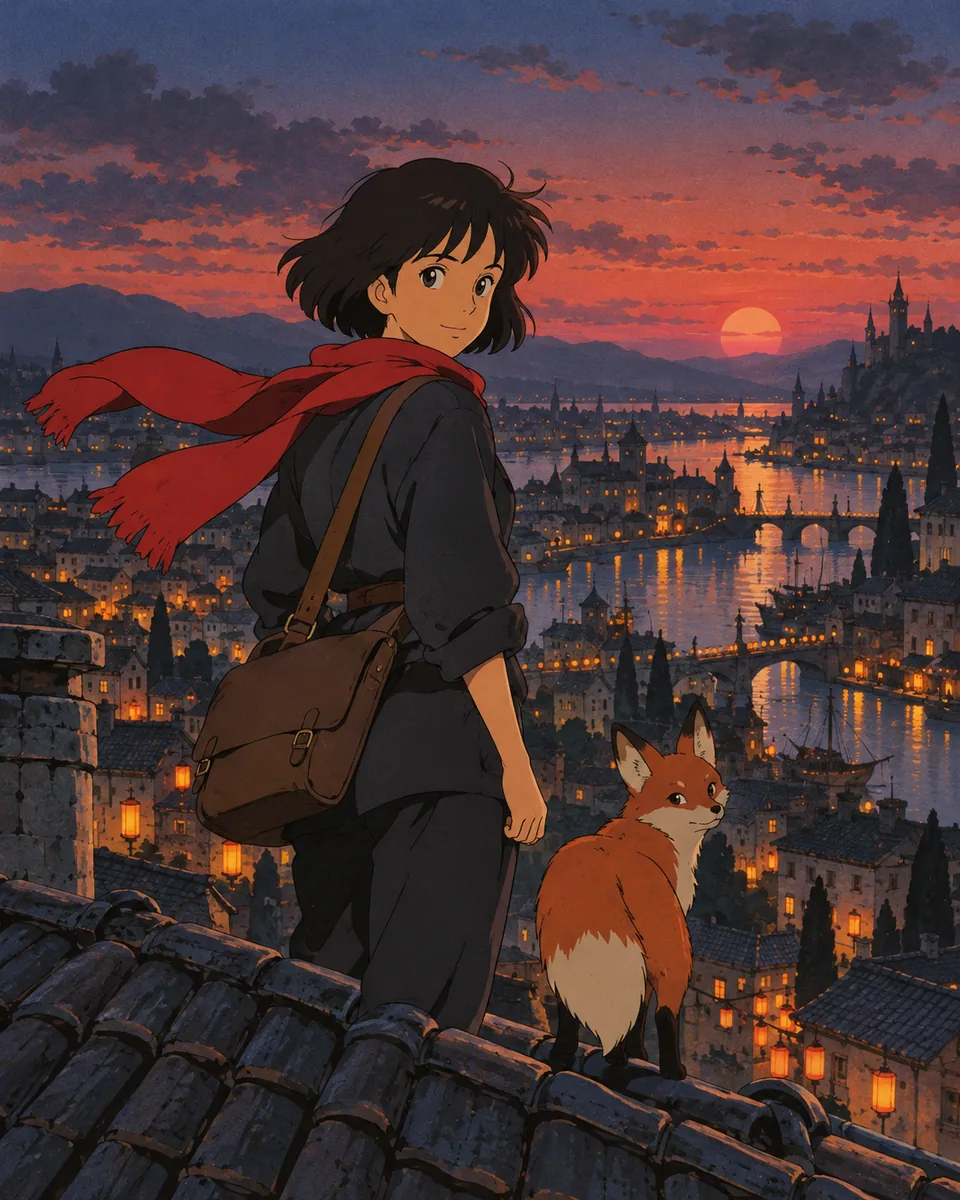 Retro anime
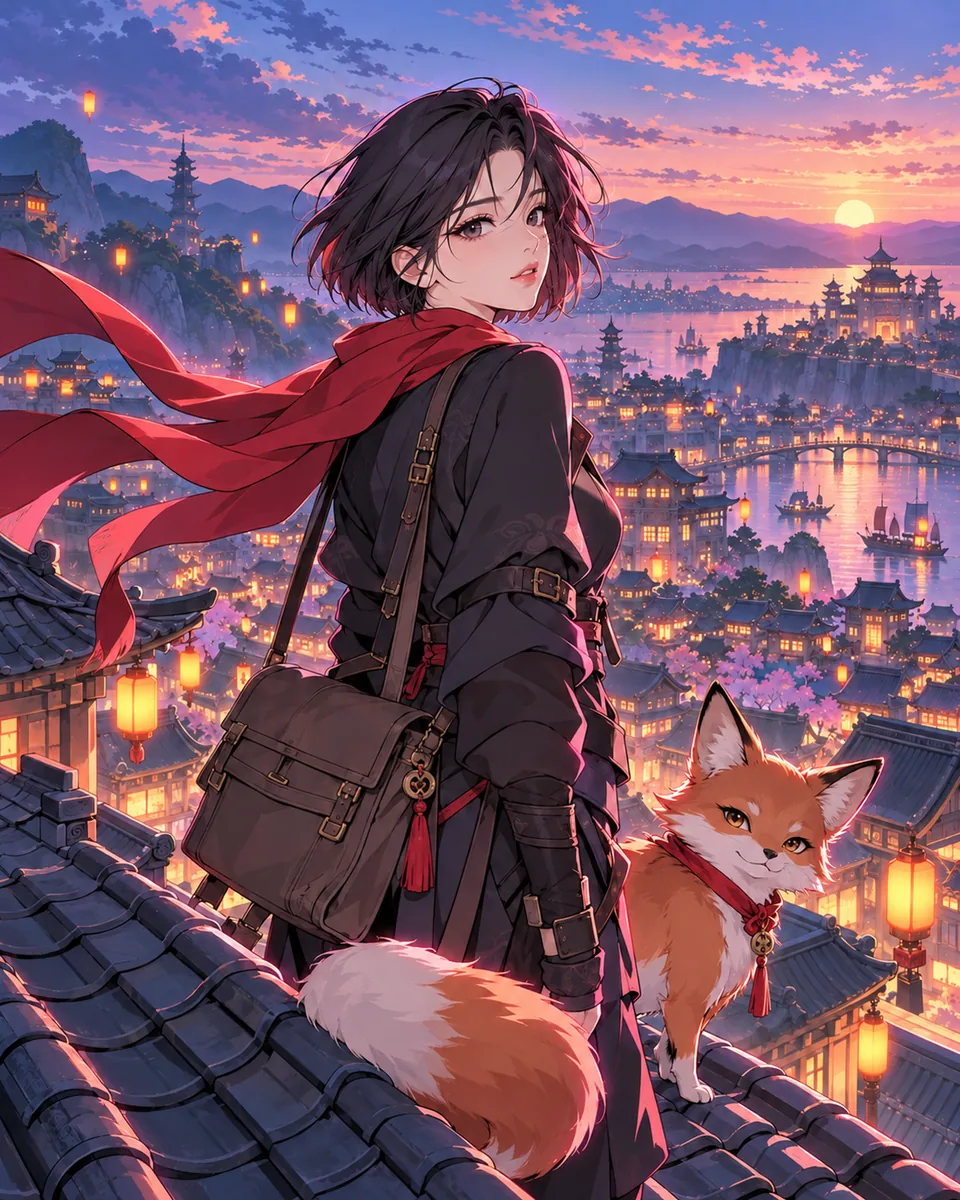 Webtoon
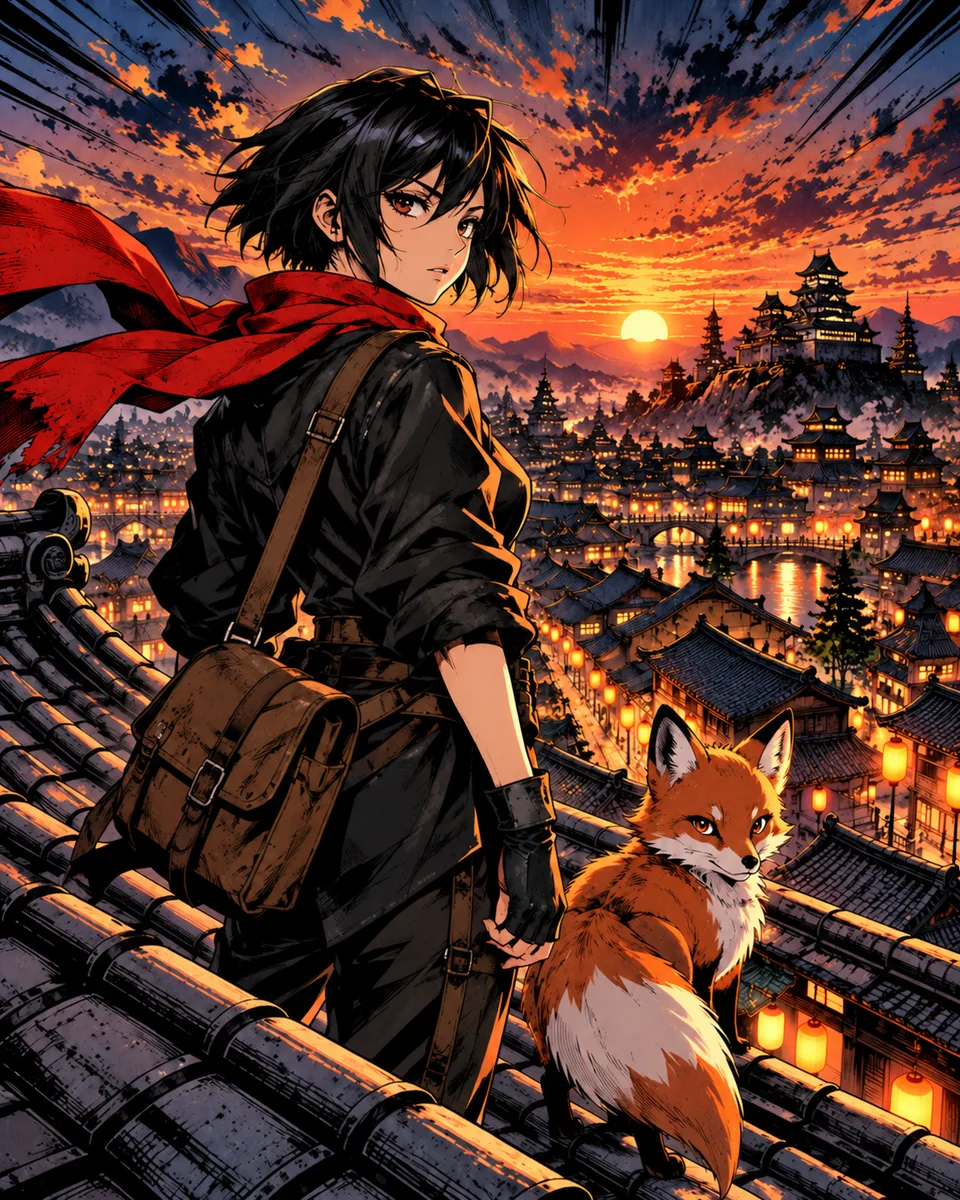 Shōnen action
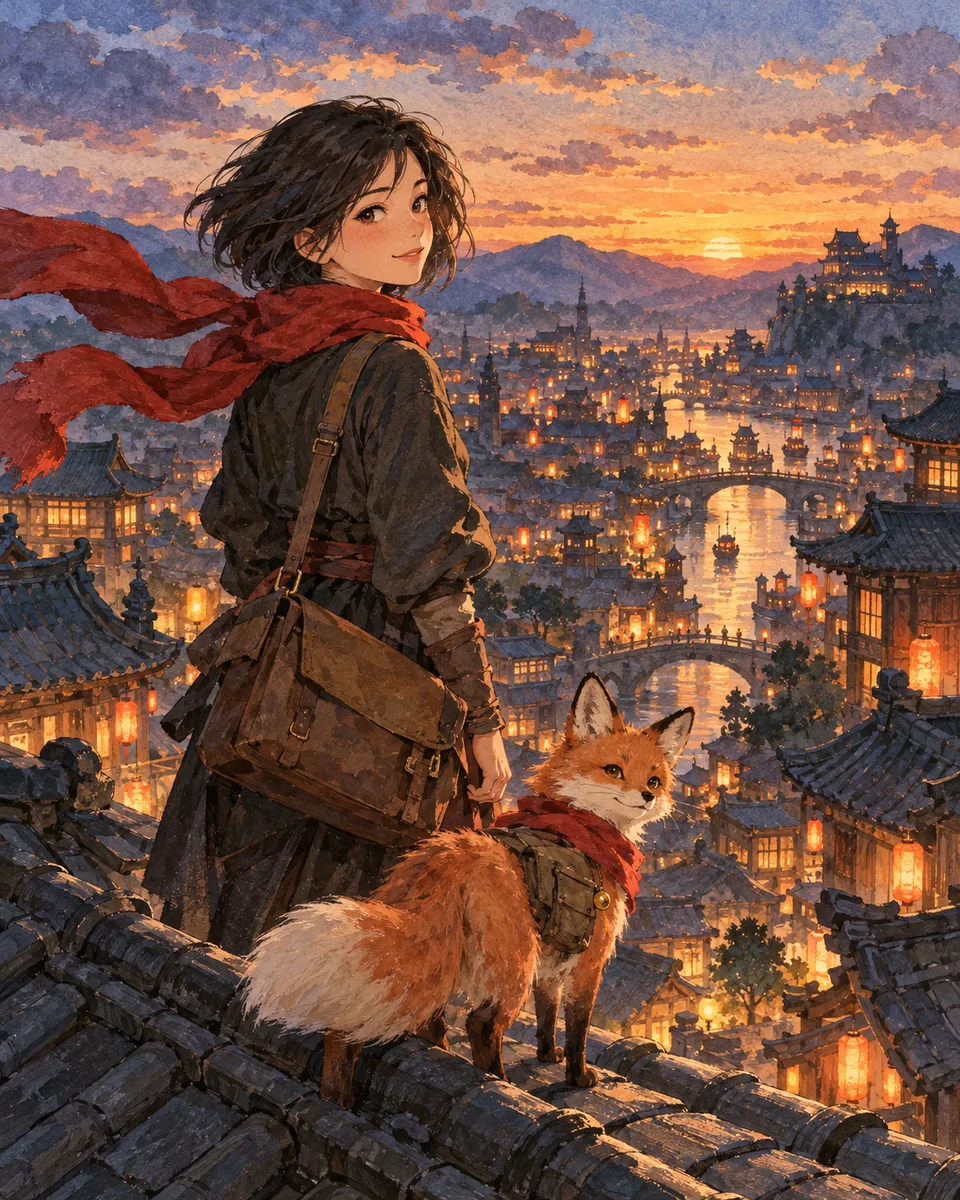 Painterly
- Against Webtoon: webtoon art uses glossy gradients and rim light. Retro anime keeps one hard shadow and a matte finish.
- Against Shōnen action: shōnen manga varies its line weight and adds speed lines and screentone. Retro anime lines are even, and the color does the work.
- Against Painterly: both have painted backgrounds, but Painterly also paints the characters. In retro anime the figures stay flat.
How to get the 90s anime look
If you draw
- Ink with a fixed-width brush. Keep the line weight even.
- Fill flat base colors. Add one shadow layer with a hard edge, set by a single light direction.
- Draw the hair shine as a separate band, then cut it with the hair shapes.
- Paint the background on its own layer with visible brush texture.
- Finish with a light grain overlay and a soft glow on lamps or the sun. Keep both subtle.
If you brief an artist or an image tool
Describe the parts, not a studio or a show. Naming a franchise invites copies of its characters, and it describes the look worse than plain words do. This is the style text that Konyomi uses for its Retro anime style:
1990s hand-painted cel anime style: clean even-weight dark outlines, flat cel colors
with one hard-edged shadow tone, slightly muted film-era palette, large eyes with
simple block highlights, voluminous hair in chunky shapes with a hard white shine
band, painted gouache backgrounds, soft film grain and slight analog glow.
The mood is left out on purpose. Our early tests showed that a mood in the style text overrode the story: a dark story came out bright. Let the scene decide whether the page feels warm or grim.
Using 90s anime style in Konyomi
Paste your story, then pick Retro anime on the art-style step. Kon draws your cast in that style first, then every panel of the chapter. The style is saved with the story, so chapter 12 matches chapter 1. Read text to manga for the full process.
The style suits slice of life, road stories, small-town mysteries and quiet science fiction: stories where the place and the evening light matter.
Common questions
What is the 90s anime aesthetic?
It is the look of late cel animation: flat color with one hard shadow, even outlines, chunky hair with a white shine band, simple eye highlights, painted backgrounds and soft film grain.
Why does 90s anime look different from modern anime?
It was painted by hand on cels and shot on film. Around 2000, studios moved to digital ink and paint, which brought smoother gradients, sharper color and cleaner light.
How do I describe 90s anime style in a prompt?
Name the parts: even dark outlines, flat cel color with one hard shadow, muted film-era palette, chunky hair with a shine band, painted backgrounds, film grain. Leave out show and studio names.
Can Konyomi draw a whole story in 90s anime style?
Yes. Pick Retro anime on the art-style step. The style is saved with the story, and Kon uses it for the cast and every chapter.
Sources
Konyomi turns a written story into manga, with the same faces on every page.